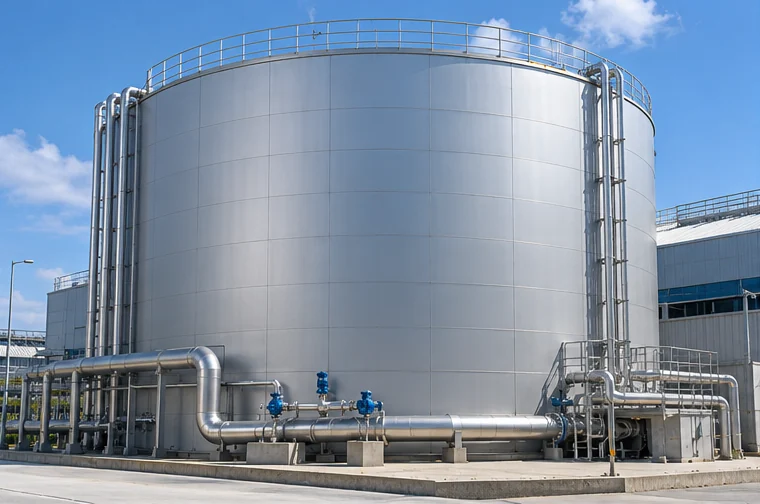
TES Storage TanksTES 储能罐
Illustrative view of large-scale chilled water thermal energy storage.
大型冷冻水蓄冷储能罐示意图
Explore how stratified TES tanks, engineered water diffusers, optional flow-management baffles and chiller plant integration work together to deliver flexible cooling capacity.
了解分层式 TES 储能罐、低扰动布水器、按需设计的导流板,以及冷水机房集成如何协同实现灵活的供冷能力。
A stratified chilled-water TES tank stores warmer return water above colder supply water. A transition zone, called the thermocline, separates them. Carefully engineered upper and lower diffusers distribute flow at low velocity to reduce unwanted mixing.
分层式冷冻水 TES 储能罐中,较暖的回水位于上层,较冷的供水位于下层,中间为温度过渡层(Thermocline)。上下布水器通过低流速、均匀布水,减少冷热水混合。
Baffles may be incorporated where hydraulic analysis shows a benefit. Temperature sensors at multiple elevations help monitor thermocline movement and state of charge.
导流板是否采用及其布置,应依据水力分析确定。不同高度的温度传感器可用于监测温跃层移动和储能状态。
Diffusers spread incoming and outgoing water across the tank section. Their geometry, openings and discharge velocity are engineered for the required flow range and temperature difference.
布水器将进出水流分配到储能罐截面。布水臂、开孔与出口流速需根据设计流量、温差及工况进行计算。
Segmented baffle plates can be considered to redirect local currents and manage recirculation. They are not a universal requirement: poorly designed plates may increase pressure loss or worsen mixing.
分段式导流板可用于调整局部水流路径及回流区,但并非所有 TES 储能罐都必须安装。设计不当可能增加压损,甚至加剧混合。
HULKEN's proposed engineering workflow evaluates baffle placement together with diffuser performance, structural support, maintenance access and hydraulic losses.
HULKEN 的设计流程建议将导流板布置与布水器性能、支撑结构、检修空间及水力损失一并评估。
Conceptual parallel arrangement showing the chilled-water supply and warm return headers, TES connection points and cooling demand. The actual piping and controls depend on plant configuration.
下图为概念性并联系统示意,展示冷冻水供水、回水总管、TES 接口及建筑冷负荷。实际管路和控制逻辑须按项目配置设计。
Chillers produce cooling to charge the tank; colder water accumulates toward the bottom as the thermocline moves upward.
冷水机组向储能罐蓄冷,低温水从底部逐步增加,温跃层向上移动。
The tank supplies chilled water to support the cooling load while warmer return water enters the upper region.
储能罐释放冷量支援建筑负荷,较暖回水进入罐体上部。
Pump sequencing, valve positions, temperature monitoring and plant optimisation coordinate the operating modes.
通过水泵联动、阀门切换、温度监测及冷站优化协调运行模式。
Engineering note: This diagram is explanatory, not a construction schematic or P&ID. Equipment, isolation, hydraulic separation, flow measurement, safety devices and controls require project-specific design verification.
工程说明:本图仅用于技术介绍,并非施工图或 P&ID。设备、隔离措施、水力解耦、流量计量、安全装置及控制逻辑需按项目详细设计与验证。
An illustrative full-cylinder calculation based on a preliminary design scenario. Values below are not approved HULKEN product specifications or project performance guarantees.
以下为依据初步设计场景进行的圆柱形储能罐理论计算,不代表 HULKEN 已批准的产品参数或项目性能保证。
| Preliminary calculated quantity初步计算项目 | Theoretical result理论计算结果 |
|---|---|
| Gross geometric volume几何总容积 | ≈ 9,556 m³ |
| Nominal temperature difference设计供回水温差 | 8.8 K |
| Ideal full-volume storage capacity全容积理想蓄冷容量 | ≈ 97.8 MWhth |
| Nominal cooling transfer rate名义冷量传输功率 | ≈ 7.74 MWth |
| Ideal equivalent duration理想等效持续时间 | ≈ 12.6 hours |
Calculation basis: cylindrical gross volume πD²H/4; water storage 1.163 kWh/(m³·K); water flow 210 kg/s and cp ≈ 4.186 kJ/(kg·K). Actual usable volume, stratification efficiency, dead zones, thermocline thickness, thermal losses and operating limits will reduce delivered capacity.
计算基础:圆柱形几何容积 πD²H/4;水的储热系数约 1.163 kWh/(m³·K);流量按 210 kg/s、比热约 4.186 kJ/(kg·K)。实际有效容积、分层效率、死区、温跃层厚度、热损失及运行限制均会影响实际可用容量。
Confirm internal water height, freeboard, structural details, operating modes, hydraulic losses and diffuser sizing before treating these values as design duty.
正式采用前必须确认有效水位、预留空间、结构细节、运行模式、水力损失及布水器尺寸。
CFD analysis can evaluate velocity fields, recirculation, temperature distribution and thermocline stability for charge and discharge modes. The panels below are placeholders for future verified simulation exports—not simulation results.
CFD 可用于评估蓄冷与放冷工况的流速场、回流区、温度分布及温跃层稳定性。以下为待填入真实模拟输出的占位区,并非 CFD 结果。
Recommended validation record: mesh-independence study, boundary conditions, turbulence/buoyancy model, design cases, pressure drop, temperature profiles and comparison against acceptance criteria.
建议 CFD 验证资料包括:网格无关性、边界条件、湍流与浮力模型、设计工况、压降、温度曲线及验收标准对比。
A structured area for client-approved references. No project names, completion claims or performance results are published until verified.
本栏目预留客户批准的工程案例。在取得确认前,不发布项目名称、完工声明或性能数据。
Replace placeholders only with owned or licensed photographs, identified with the relevant project and permission status.
请仅使用自有或获得授权的照片,并确认对应项目及使用许可。
Explore the systems and equipment behind integrated thermal energy storage solutions.
了解一体化蓄冷储能系统的关键设备及工程技术。
Illustrative view of large-scale chilled water thermal energy storage.
大型冷冻水蓄冷储能罐示意图
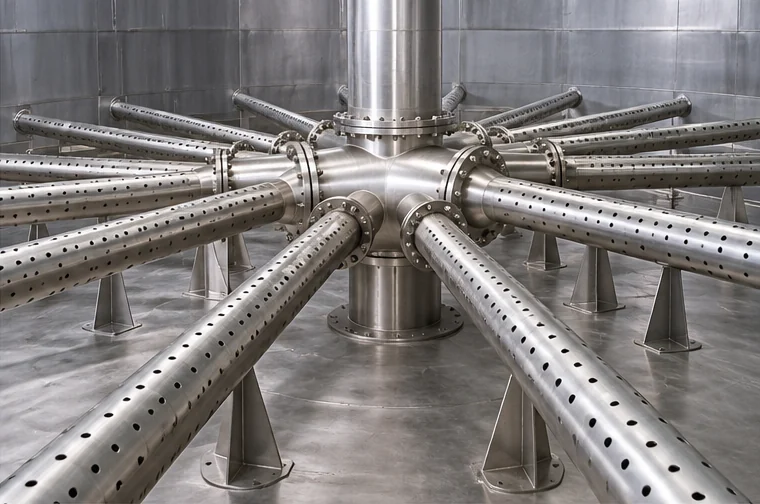
Radial diffuser concept for controlled flow distribution.
径向布水器与均匀布水概念示意
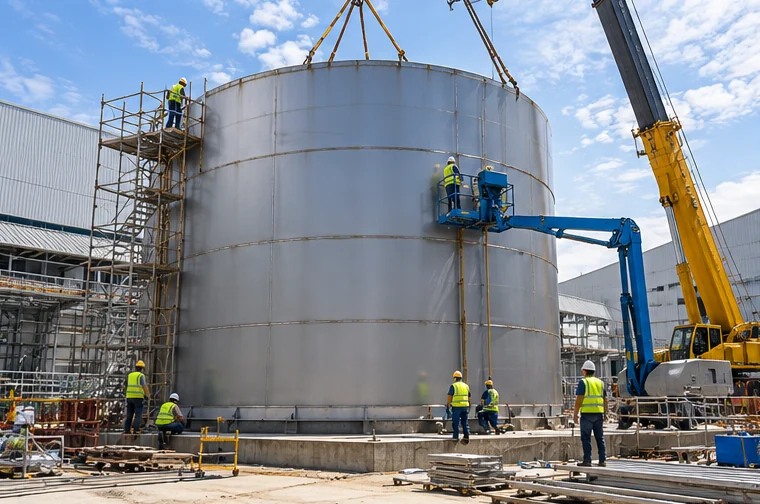
Illustrative construction and tank erection activities.
储能罐制造与现场安装示意
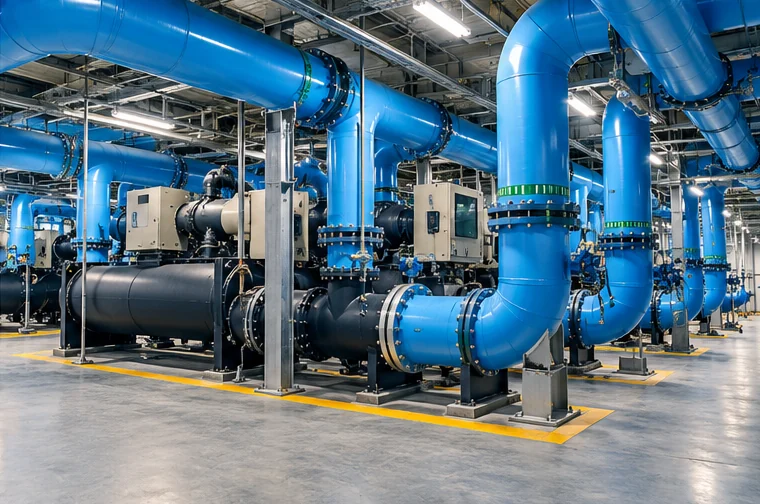
Chiller plant piping, pumps and system integration.
冷水机组、水泵与管道系统集成示意
Images are AI-generated conceptual illustrations for visual reference only. They are not photographs of completed HULKEN projects or validated product configurations.
图片为 AI 生成的概念示意,仅供展示;并非 HULKEN 已完成项目的实拍照片或经验证的产品设计。